Entry Method Selection: Online Forms, Mail-In, Codes, and Receipts Compared
A practical comparison of six sweepstakes entry methods (online forms, mail-in, code entry, receipt upload, surveys, and referrals), covering compliance requirements, fraud risk, data collection, and when to use each.
The entry method you choose for your sweepstakes shapes nearly every aspect of the promotion. It determines the compliance requirements you must meet, the participant experience you deliver, the data you collect, the fraud risks you face, and how effectively the promotion supports your business goals. Choosing the wrong entry method can undermine an otherwise well-planned campaign: driving low participation, creating compliance gaps, or exposing you to fraud that erodes the promotion's integrity.
Most brands default to the entry method they are most familiar with or the one that seems simplest. But each method has distinct trade-offs, and the right choice depends on what you are trying to accomplish. A lead generation campaign has different needs than a purchase verification campaign. A product sampling initiative calls for a different approach than a viral growth play.
What follows compares six common entry methods side by side, covering how each works, what it is best for, and what compliance obligations it triggers.
This article is for informational purposes only and does not constitute legal advice. Consult with a qualified attorney for guidance specific to your promotion.
Why Entry Method Matters
The entry method is not a minor implementation detail. It is one of the first decisions you make when designing a promotion, and it cascades into every subsequent decision. Get it wrong and nothing downstream can compensate.
Entry methods that involve a purchase (code entry, receipt upload) require an Alternative Method of Entry (AMOE) to avoid crossing the line into an illegal lottery. Free entry methods (online forms) generally do not. Higher-friction entry methods (receipt upload, mail-in) generate fewer entries but higher-quality engagement, while lower-friction methods generate volume but may attract less committed participants.
Data collection varies dramatically by method. Receipt uploads capture retailer, products, and prices. Online forms yield only basic contact information. Fraud exposure differs too: online forms attract bots, code entry creates code-sharing risk, and referral programs invite fake account creation. And each method aligns naturally with different campaign goals: lead generation, purchase verification, consumer research, or viral growth. Matching the method to the goal is the foundation of effective campaign design.
Online Form Entry
How It Works
The participant visits a website or landing page and fills out a form, typically name, email address, mailing address, and date of birth. Upon submission, the entry is recorded and the participant is eligible for the drawing.
Strengths
Online forms offer the lowest friction of any entry method: no purchase required, no code to find, no receipt to photograph. The participant fills out a form in under a minute. Because friction is minimal, online form promotions consistently generate the most entries per marketing dollar spent. Entries are captured and validated in real time: no manual data entry, no OCR processing, no postal delay.
Weaknesses
The trade-off is clear. Online forms are the most vulnerable entry method for bots, multi-accounting, and automated submissions. Without fraud detection (CAPTCHA, device fingerprinting, IP analysis), a significant percentage of entries may be fraudulent. An online form cannot verify that the participant purchased anything, so if your campaign goal is purchase validation, this method alone will not accomplish it. And filling out a form is a shallow interaction: the participant invests little time or effort, which may translate to lower brand recall and engagement quality.
Best For
Awareness campaigns, email list building, lead generation, and promotions where maximizing entry volume is the primary goal.
Compliance Notes
If the online form is the only entry method and it is free to enter, no AMOE is required; the form itself is the free entry method. However, if the form entry is offered alongside a purchase-linked entry method (such as code entry), the form serves as the AMOE and must provide equal treatment. For more on the legal requirements, see our guide on no purchase necessary.
Mail-In Entry
How It Works
The participant handwrites their name, address, and other required information on a 3x5-inch card (or plain piece of paper) and mails it to a specified address. The entry is manually processed and recorded upon receipt.
Strengths
- Universally accepted as AMOE. Regulators and courts have consistently accepted mail-in entry as a legitimate alternative method of entry. The cost of a postage stamp is universally recognized as not constituting "consideration" under lottery law, though this is not because the cost is zero, but because it is a cost the entrant would bear regardless (postage to mail a letter).
- Creates a paper trail. Physical entries provide tangible documentation of participation.
- Low fraud risk. The effort required to mail a physical entry dramatically reduces fraudulent submissions. While not impossible to abuse, mail-in fraud is orders of magnitude less common than online fraud.
Weaknesses
- Slow processing. Mail takes days to arrive, and manual data entry takes additional time. Entry processing can lag weeks behind online methods.
- Manual data entry. Someone must open each envelope, read the handwriting, and enter the information into the system. This is labor-intensive and error-prone.
- Declining usage. Very few participants choose mail-in entry when online alternatives are available. Response rates for mail-in AMOE are typically below 1% of total entries.
- Postal costs for processing. The sponsor must rent a PO Box, process incoming mail, and manage the physical entries throughout the promotion period.
Best For
Serving as the AMOE alongside purchase-linked entry methods. Mail-in is rarely the primary entry method for modern promotions, but it remains the gold standard for AMOE compliance.
Compliance Notes
Mail-in entry satisfies the no purchase necessary requirement for promotions that would otherwise require a purchase. When offering mail-in as an AMOE, the official rules must clearly state the mailing address, the required format (3x5 card, etc.), the information to include, the entry deadline (postmark date), and the entry limit, which must be equal to the limit for the purchase-linked entry method.
Code Entry
How It Works
Unique alphanumeric codes are printed on product packaging, included in product inserts, or distributed through other channels. The participant enters the code on a website or app to receive a sweepstakes entry. Each code is validated against a database of issued codes and can typically be used only once.
Strengths
- Ties entry to purchase or engagement. Because codes are distributed with products or through specific channels, entry is linked to a verifiable action, typically a purchase.
- Trackable and auditable. Every code is unique, and the system tracks when and by whom each code was redeemed. This creates a complete audit trail.
- Fraud-resistant. Unique codes cannot be generated by bots (assuming the code pool is properly managed). Each valid entry requires a legitimate code.
- Flexible distribution. Codes can be printed on packaging, included in email campaigns, distributed at events, or embedded in partner promotions.
Weaknesses
- Requires code pool management. You must generate, distribute, track, and expire codes. Code pool logistics add complexity to the promotion.
- Code sharing risk. Participants may share unused codes online, allowing others to enter without purchasing. This can be mitigated by one-use codes and monitoring, but it cannot be eliminated entirely.
- Requires AMOE. Because code entry is typically linked to a purchase, you must provide a free alternative method of entry, usually mail-in or an online form.
- Participant friction. Finding the code on the package, visiting the website, and entering the code is more friction than a simple online form. This reduces entry volume compared to lower-friction methods.
Best For
Purchase-linked promotions, on-pack campaigns, CPG promotions, and any campaign where tying entry to a specific product or action is important.
Compliance Notes
Codes obtained through a purchase constitute "consideration" under lottery law. This means an AMOE is required: participants must have a way to enter without making a purchase. The AMOE must provide the same number of entries and the same odds of winning as the purchase-linked code entry. For a full explanation, see our guide on no purchase necessary requirements.
Receipt Upload
How It Works
The participant purchases a qualifying product, photographs the receipt, and uploads the image through a website or app. The receipt is processed, typically using OCR (optical character recognition) and validation logic, to verify that the qualifying purchase was made. If validated, the participant receives a sweepstakes entry.
Strengths
- Verifies actual purchase. Unlike code entry (where codes can be shared), receipt upload confirms that a specific purchase was made at a specific retailer on a specific date.
- Captures rich data. A receipt contains the retailer name, location, date, products purchased, prices paid, and payment method. This data is valuable for consumer insights, retailer analytics, and marketing attribution.
- Supports rebate campaigns. Receipt upload is the foundation of digital rebate promotions, where the purchase verification triggers a cash-back reward rather than (or in addition to) a sweepstakes entry.
- Multi-product campaigns. Receipt validation can check for purchases of specific products, specific quantities, or minimum purchase amounts, enabling sophisticated promotional structures.
Weaknesses
- Requires OCR and validation technology. Processing receipt images requires computer vision, OCR, and validation logic. Image quality varies widely (crumpled receipts, poor lighting, faded thermal paper), and validation is not always accurate on the first attempt.
- Processing time. Receipt validation is not instant. Even with automated OCR, some receipts require manual review. Participants may wait minutes or hours for confirmation.
- Higher friction. Taking a photo, ensuring it is legible, and uploading it is significantly more effort than entering a code or filling out a form.
- Requires AMOE. Because receipt upload requires a purchase, an AMOE is mandatory.
Best For
CPG purchase verification, rebate campaigns, purchase-linked sweepstakes, and promotions where confirming actual consumer purchases is a core requirement. For more on structuring receipt-based promotions, see our guide on receipt upload promotions.
Compliance Notes
Receipt upload requires a purchase, which constitutes consideration. An AMOE is required, and it must provide equal entry opportunities. The official rules should specify what constitutes a qualifying receipt (retailer types, date range, product requirements) and what happens if a receipt is rejected (resubmission allowed, appeal process, etc.).
Survey Entry
How It Works
The participant completes a survey, typically 5 to 15 questions about product preferences, purchase behavior, brand awareness, or other marketing topics. Upon completion, the participant receives a sweepstakes entry.
Strengths
- Collects consumer insights. The survey itself generates valuable data. When combined with a sweepstakes incentive, response rates are significantly higher than for unincentivized surveys.
- Dual-purpose. The promotion serves two goals simultaneously: marketing engagement and consumer research. This can justify larger budgets because the survey data has independent value.
- Moderate friction discourages bots. Completing a multi-question survey takes more effort than submitting a simple form, which naturally reduces low-quality and automated entries.
- Flexible format. Surveys can range from a single question to a detailed questionnaire, depending on the research objectives.
Weaknesses
- Data quality concerns. When survey completion is incentivized, some participants will rush through, selecting random answers to reach the sweepstakes entry as quickly as possible. Survey design must account for this: attention checks, reasonable length, and clear questions help maintain data quality.
- Survey fatigue. Long surveys or overly complex questions reduce completion rates. Finding the balance between collecting useful data and maintaining a good participant experience is critical.
- Limited purchase verification. A survey cannot verify that the participant purchased anything. Self-reported purchase data in surveys is unreliable.
Best For
Consumer research combined with promotional engagement, product feedback campaigns, market research, and brand health studies. For more on survey-based promotions, see our guide on survey sweepstakes.
Compliance Notes
Brief surveys (under 5 minutes) are generally not considered "consideration" under lottery law, meaning an AMOE may not be strictly required. However, best practice is to offer an AMOE regardless: it eliminates any ambiguity and protects against jurisdictions that might take a broader view of what constitutes consideration. If the survey is lengthy or burdensome, the argument that it constitutes consideration becomes stronger, and an AMOE becomes more clearly necessary.
Referral Entry
How It Works
A participant enters the promotion and receives a unique referral link. When they share the link and a new participant enters through it, the original participant earns an additional entry (or entries). The referred participant also receives their own entry and their own referral link, creating a potential chain of referrals.
Strengths
- Viral growth mechanics. Referral programs tap into network effects: each participant becomes a distribution channel, potentially reaching audiences that paid marketing cannot.
- Low acquisition cost. New participants acquired through referrals cost significantly less than those acquired through advertising.
- Community building. Referral mechanics create social investment in the promotion, as participants have a personal incentive to encourage friends and family to participate.
- Tiered rewards. Referral programs can offer escalating rewards (more referrals earn more entries or unlock bonus prizes), which motivates sustained sharing.
Weaknesses
- Fraud risk. Referral programs are vulnerable to self-referral (creating fake accounts to earn referral entries), referral rings (groups creating entries for each other), and automated referral link abuse.
- Complexity. Tracking referral chains, attributing entries, calculating tier rewards, and preventing fraud adds significant operational and technical complexity.
- Anti-pyramid concerns. Referral structures that extend multiple levels can raise regulatory concerns about pyramid scheme characteristics. Keeping the referral structure shallow (one level, or at most two) mitigates this risk.
- FTC endorsement considerations. When participants promote a sweepstakes to their network in exchange for additional entries, this may constitute an endorsement under FTC disclosure requirements. Participants should be encouraged to disclose their relationship to the promotion when sharing.
Best For
Growth campaigns, community building, product launches, and promotions where expanding reach organically is a primary objective. For more on structuring referral promotions, see our guide on referral sweepstakes.
Compliance Notes
Referral entry cannot be the sole entry method; there must be a way for the initial participant to enter without a referral. An AMOE is required because the incentive structure (earn entries by recruiting others) creates a form of consideration (labor/effort). The official rules must clearly state the referral mechanics, entry limits, and how referral entries are counted.
Comparison Table
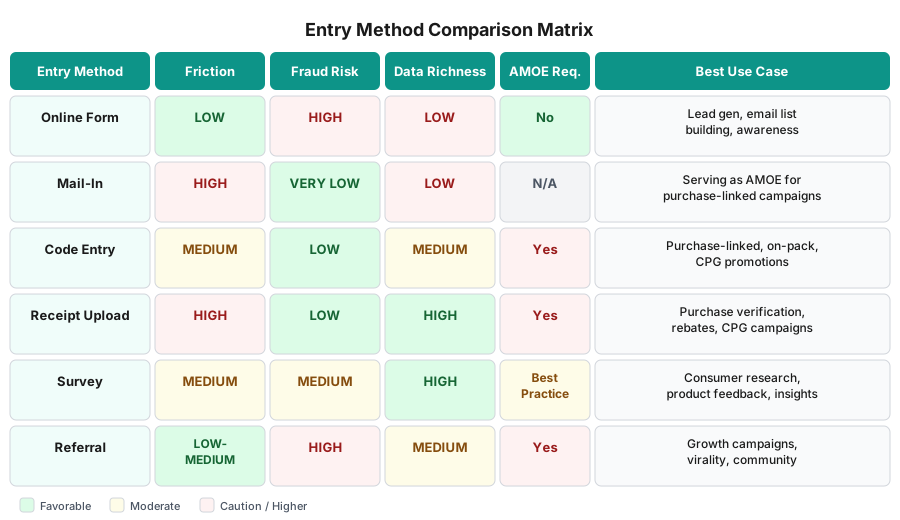
| Factor | Online Form | Mail-In | Code Entry | Receipt Upload | Survey | Referral |
|---|---|---|---|---|---|---|
| Friction Level | Very Low | High | Medium | High | Medium | Low-Medium |
| Fraud Risk | High | Very Low | Low | Low | Medium | High |
| Data Richness | Basic (contact info) | Basic (contact info) | Medium (purchase signal) | High (retailer, products, prices) | High (custom questions) | Medium (social graph) |
| AMOE Required | No (if free) | N/A (is the AMOE) | Yes | Yes | Best practice | Yes |
| Best Use Case | Lead generation | AMOE | Purchase-linked | Purchase verification | Consumer research | Growth / virality |
| Compliance Complexity | Low | Low | Medium | Medium-High | Low-Medium | Medium-High |
| Entry Volume | Highest | Lowest | Medium | Low-Medium | Medium | Variable |
Combining Entry Methods
Many successful promotions use multiple entry methods to serve different objectives simultaneously. Common combinations include:
Purchase + AMOE. A code entry or receipt upload method for purchase-linked entries, paired with a mail-in or online form AMOE for free entries. This is the most common structure for CPG promotions.
Online form + Referral. A free online form as the primary entry, with referral mechanics to amplify reach. Each participant can enter once via the form and earn additional entries through referrals.
Code entry + Receipt upload. Some promotions accept both codes and receipts: codes for on-pack products and receipts for products without codes (or for products purchased before codes were printed on packaging).
Critical Rule: Equal Treatment
When combining entry methods, the fundamental compliance principle is equal treatment. Every participant must have the same opportunity to win, regardless of which entry method they use. This means:
- Entry limits must be consistent across all methods (if purchase entries are limited to one per day, AMOE entries must have the same limit)
- Each entry, whether from a code, a receipt, a form, or a referral, must carry the same weight in the drawing
- The odds of winning must be accurately disclosed, accounting for all entry methods
Your official rules must clearly describe every available entry method, the entry limits for each, and how entries from different methods are treated in the winner selection process.
Compliance Considerations
Entry method selection has direct compliance implications that must be addressed in the promotion design:
- The consideration question is central. Whether your entry method involves "consideration" (something of value given by the participant) determines whether an AMOE is required. Purchases are consideration. Postage generally is not. Time and effort exist in a gray area. When in doubt, offer an AMOE.
- AMOE parity is non-negotiable. If you offer an AMOE, it must provide genuinely equal entry opportunities. An AMOE that is harder to find, more burdensome to complete, or limited to fewer entries than the primary method does not satisfy the requirement. Regulators have seen every variation of the "technically available but practically impossible" AMOE, and they are not fooled by it. For detailed guidance, see our AMOE guide.
- Fraud prevention must not exclude legitimate entries. Anti-fraud measures (CAPTCHA, device fingerprinting, IP limits) are important, but overly aggressive measures can block legitimate participants, particularly those using VPNs, shared networks, or older devices. Balance security with accessibility.
- State-specific requirements apply regardless of entry method. Registration in New York, Florida, and Rhode Island is triggered by prize value, not by entry method. Whether your promotion uses online forms or receipt uploads, the state registration requirements are the same.
- Data collection must comply with privacy laws. Every entry method collects personal information. Your privacy policy must disclose what data is collected, how it is used, and who it is shared with. State privacy laws (California CCPA/CPRA, Virginia VCDPA, Colorado CPA, and others) impose specific requirements on data handling.
How Comprizant Handles Entry Methods
Comprizant's composable entry method system supports the core entry methods described in this guide, configured per campaign:
Configurable entry methods. Online form, mail-in, online AMOE, code entry, and receipt upload are available as building blocks. Enable one or more per campaign, each with its own configuration: entry limits, validation rules, and processing pipeline.
Built-in AMOE configuration. When you select a purchase-linked entry method (code entry or receipt upload), Comprizant configures an AMOE with matching entry limits and equal treatment in winner selection.
Unified entry processing pipeline. Regardless of entry method, every entry flows through the same processing pipeline: validation, fraud detection, enrichment, and recording. This gives every entry consistent treatment and a single source of truth across all methods.
Method-specific fraud detection. Each entry method has its own fraud profile, and Comprizant applies appropriate detection for each: bot detection and rate limiting for online forms, code pool integrity monitoring for code entry, and OCR validation for receipt uploads.
Key Takeaways
- Match the entry method to your campaign goal. Lead generation favors online forms. Purchase verification favors receipts or codes. Growth favors referrals. Consumer research favors surveys. There is no universally "best" entry method.
- Purchase-linked entry methods require an AMOE. If participants must buy something to enter, you must provide a free alternative that offers equal entry opportunities. This is a legal requirement, not a suggestion.
- Every entry method has a distinct fraud profile. Design your fraud prevention strategy around the specific risks of your chosen entry method, not around generic security measures.
- Combining entry methods is powerful but adds compliance complexity. When using multiple methods, verify equal treatment, consistent entry limits, and accurate odds disclosure across all methods.
- The entry method decision is an early one. It affects compliance planning, technology requirements, participant experience design, and campaign economics. Make the decision deliberately, based on your specific objectives and constraints.
Ready to Choose the Right Entry Method?
Comprizant's composable campaign engine lets you configure any combination of its entry methods, with built-in AMOE configuration, unified processing, and method-specific fraud detection.