Best Sweepstakes Software in 2026: Platform Comparison Guide
A comparison of sweepstakes software in 2026, from DIY contest builders to full-service administration agencies to compliance-first platforms. Evaluation framework, feature breakdowns, and a decision guide for choosing the right approach.
Choosing sweepstakes software is a decision that most marketing teams get wrong on the first try. They pick a tool based on templates and pricing, launch a promotion, and then discover (mid-campaign or after a state attorney general inquiry) that the platform they chose handles none of the compliance, fraud prevention, or legal infrastructure that running a legitimate sweepstakes requires.
The sweepstakes software market in 2026 is fragmented. Some tools are excellent at building entry forms and collecting email addresses. Others handle the full legal and operational burden but charge five figures per promotion. A newer category automates compliance through software rather than through billable hours. These are fundamentally different products solving different problems, and the right choice depends on what kind of promotion you are running, what risks you need to manage, and how much you are willing to spend.
The right question is not which sweepstakes software is best, but what kind of promotions you are running. The answer determines the category you should be shopping in.
This article is for informational purposes only and does not constitute legal advice. Consult with a qualified attorney for guidance specific to your promotion.
The 7 Criteria That Actually Matter
Before comparing specific platforms, you need an evaluation framework. Most sweepstakes software comparison articles focus on surface-level features: number of templates, integrations, UI design. These matter, but they are not what determines whether your promotion runs legally and effectively.
Here are the seven criteria that separate adequate sweepstakes software from dangerous sweepstakes software:
1. Campaign Types Supported
A platform that only supports social media giveaways will not help you run a receipt-upload promotion, an instant-win game, a rebate campaign, or a referral program. The range of campaign types a platform supports determines whether you will outgrow it after your first promotion.
2. Compliance Capabilities
This is the single most important criterion and the one most platforms fail entirely. Compliance means: official rules generation, state registration detection and tracking (New York, Florida, Rhode Island have specific requirements), bonding requirement identification, AMOE (Alternative Method of Entry) generation, and regulatory disclosure management. A platform with zero compliance capabilities is not sweepstakes software: it is a form builder with a sweepstakes template. For background on what compliance actually entails, see our complete compliance guide.
3. Entry Method Flexibility
Modern promotions require more than a name-and-email form. Receipt upload, code entry, mail-in, survey completion, referral link sharing: each entry method has its own compliance and fraud implications. A platform that only supports online form entry locks you into the simplest (and often lowest-value) promotion type.
4. Fraud Prevention
Every online sweepstakes attracts fraud. Bot entries, multi-accounting, receipt fabrication, referral abuse: these are not edge cases, they are standard operating conditions. A platform with no fraud prevention is asking you to give prizes to bots. For a detailed breakdown of the threat landscape, see our fraud prevention guide.
5. Prize Fulfillment
Drawing a winner is only half the operation. Fulfillment (verifying the winner, collecting tax information, shipping or delivering the prize, sending 1099s) is where most promotions encounter operational friction. Some platforms handle this end-to-end. Most do not.
6. Analytics and Reporting
You need to know how your promotion is performing in real time: entry volume, entry methods breakdown, fraud detection rates, geographic distribution, conversion metrics. Basic form analytics (how many people submitted) is not enough for a serious promotion.
7. Pricing Model
Sweepstakes software pricing ranges from $99/month to $50,000+ per promotion. The pricing model (per-month subscription, per-promotion fee, or percentage of prize value) determines whether the economics make sense for your promotion volume and prize budgets.
The Three Categories of Sweepstakes Tools
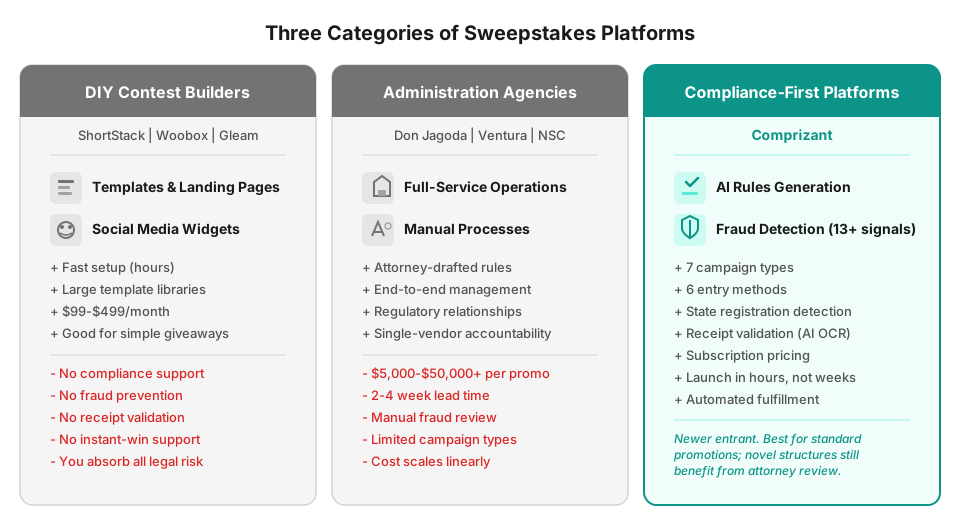
The market divides cleanly into three categories, each with a fundamentally different approach to the problem.
Category 1: DIY Contest Builders
These are the platforms most people find first when searching for sweepstakes software. They are template-based tools designed primarily for social media giveaways and email collection campaigns. They are good at what they do, and what they do is narrower than most buyers realize.
ShortStack
ShortStack is the most established player in this category, with 189+ contest and giveaway templates. Its strengths are Instagram and Facebook integration, landing page creation, and email collection form design. The template library is genuinely impressive, and the drag-and-drop builder makes it easy to launch a social media giveaway in an afternoon.
What ShortStack does not do: generate official rules, track state registration requirements, detect or prevent fraud, validate receipts, support instant-win mechanics, or manage prize fulfillment. If you run a ShortStack promotion and it triggers New York or Florida registration requirements, that is your problem to figure out. Pricing runs approximately $99-$499/month depending on the plan.
Woobox
Woobox takes a similar template-based approach focused on social media promotions: polls, quizzes, hashtag contests, voting contests, coupon distribution, and Facebook tab integrations. It was a solid platform in the Facebook-dominant social media era.
The concern with Woobox in 2026 is trajectory. The blog has published essentially one post since October 2023. Product updates are not visible. The platform's core strengths (Facebook tab integration, social media widgets) reflect a promotional landscape that has shifted significantly in the past three years. The same compliance gaps apply: no rules generation, no state registration, no fraud prevention, no receipt validation.
Gleam
Gleam is popular for smaller giveaways, particularly among digital creators and small businesses. Its widget-based entry system supports multiple entry actions (visit a page, follow on social media, share a link) which makes it effective for building social engagement. Compliance capabilities are minimal.
KickoffLabs
KickoffLabs focuses on landing pages with built-in viral referral mechanics. It is more of a referral-driven lead generation tool than a sweepstakes platform, but it shows up in sweepstakes software searches because its landing pages can be used for giveaway promotions. No compliance features.
Strengths of DIY Contest Builders
DIY contest builders do one thing well: they get a giveaway page live fast. You pick a template, drop in your branding, connect your social accounts, and you are collecting entries within hours. The template libraries are large (ShortStack alone has 189+), the social media integrations are mature, and the price point ($99-$499/month) fits most marketing budgets without a procurement fight.
If you are giving away a $100 gift card on Instagram and your only goal is email collection, these tools work fine. They were built for exactly that use case.
Weaknesses of DIY Contest Builders
- Zero compliance support. No official rules generation. No state registration detection. No bonding requirement tracking. No AMOE generation. You are entirely on your own for legal compliance.
- No fraud prevention. No bot detection, no device fingerprinting, no behavioral analysis, no IP clustering detection. Basic form validation (required fields, email format) is the extent of it.
- No receipt validation. Cannot support purchase-required promotions.
- No instant-win mechanics. Cannot support real-time prize distribution.
- Limited entry methods. Online form entry and social media actions only. No mail-in AMOE, no code entry, no receipt upload.
- No prize fulfillment. Winner selection may be supported, but everything after (verification, tax forms, delivery) is manual.
- You absorb all legal risk. If your promotion violates state law because you did not register in New York or file a bond in Florida, the platform bears no responsibility. You do.
Category 2: Sweepstakes Administration Agencies
On the opposite end of the spectrum are full-service administration agencies. These firms have been the backbone of the promotional marketing industry for decades. They are staffed with attorneys, experienced administrators, and operational teams who handle every aspect of a sweepstakes.
Notable Agencies
National Sweepstakes Company handles rules drafting, state registrations, winner selection, prize fulfillment, and bonding for national promotions. Ventura Associates has decades of experience administering sweepstakes for major CPG brands. Don Jagoda Associates (DJA) is one of the oldest and most established firms in the space, serving Fortune 500 brands.
These are legitimate, experienced operations. They know the law, they know the regulators, and they know how to run promotions without legal incidents.
Strengths of Administration Agencies
The value of an agency is simple: you hand them a brief and they handle everything. Rules, registration, bonding, entry processing, winner selection, fulfillment, tax reporting. The entire operational and legal burden transfers to a team that has done this thousands of times. Their in-house attorneys specialize in promotional law. Their relationships with bonding companies and state regulators mean faster processing. And when something goes wrong, there is one phone number to call.
For brands with high-stakes promotions and no in-house expertise, that single-vendor accountability is worth the price tag.
Weaknesses of Administration Agencies
- Expensive. $5,000-$15,000+ per promotion for standard sweepstakes. $25,000-$50,000+ for complex national campaigns. These are per-promotion costs, not subscription fees.
- Slow. Typical lead time is 2-4 weeks from brief to launch. Rules drafting, legal review, registration filing, and operational setup all take time.
- Manual processes. Most agencies operate on human labor rather than automation. Entry processing, fraud review, and winner verification are manual workflows.
- Limited technology. No real-time fraud detection with automated signals. No AI-powered receipt validation. No instant-win game engines. The technology layer is basic because the service model relies on people, not software.
- Not economical for frequent promotions. If you run 10 promotions per year at $10,000 each, you are spending $100,000 annually on administration alone. The per-promotion cost model penalizes volume.
- Limited campaign types. Most agencies are optimized for standard sweepstakes. Modern campaign types like receipt-upload promotions, instant-win games, digital rebates, and referral programs may require custom technology builds at additional cost.
Category 3: Compliance-First Platforms
This is the newest category: software that automates the compliance, fraud prevention, and operational infrastructure that agencies provide manually, delivered at software pricing rather than professional services pricing.
Comprizant
Comprizant is built on a different premise than either contest builders or administration agencies. The premise is that promotional compliance follows well-established patterns that can be automated, that fraud prevention is a technology problem best solved with technology, and that brands should be able to run compliant promotions without hiring an agency for every campaign.
AI-Powered Rules Generation. Campaign parameters (promotion type, dates, eligible states, prize structure, entry methods, sponsor information) feed into a rules engine that generates complete official rules with all required sections, state-specific provisions, correct AMOE instructions, current legal references, and platform-specific disclaimers. Rules are generated in minutes, not weeks. For a deep dive into what official rules require, see our official rules guide.
Automated State Registration Detection. The platform identifies when a promotion triggers state registration requirements based on prize value, eligible states, and promotion type. Registration forms are pre-filled with campaign data. New York, Florida, and Rhode Island each have different thresholds and requirements. The system tracks all of them.
Multi-Layer Fraud Prevention. Every entry passes through a processing pipeline that evaluates 13+ fraud signals across four detection adapters: cross-submission analysis, device fingerprinting, phone verification, and behavioral analysis. Configurable thresholds let sponsors set their own tolerance levels. Entries that exceed fraud thresholds route to a human-in-the-loop review queue.
Sweepstakes and Instant Win Campaigns. Each campaign type has its own compliance requirements, entry methods, and fulfillment logic, all supported within the platform.
Five Entry Methods. Online form, mail-in, online AMOE, receipt upload, and code entry. Each entry method generates appropriate AMOE provisions in the official rules automatically.
Receipt Validation Technology. AI-powered receipt scanning that verifies purchase of qualifying products, validates retailer and date requirements, and flags suspicious images. Essential for purchase-required promotions.
Prize Fulfillment Automation. Winner notification, verification workflows, code delivery, and fulfillment tracking. Supports both digital and physical prize distribution.
Strengths:
- Compliance automation at software pricing, not $10,000 per promotion.
- Technology-driven fraud prevention that operates in real time, not manual review.
- Supports modern campaign types that DIY builders cannot handle and agencies charge premiums for.
- Fast setup. Configure and launch in hours, not weeks.
- Per-promotion pricing. Pay for each promotion you run.
Weaknesses:
- Newer entrant to the market. Does not have the decades of track record that established agencies carry.
- Best suited for brands that want to manage their own promotions with compliance guardrails. If you want to fully outsource everything and never think about your promotion again, an agency may be a better fit.
- Not a replacement for legal counsel on novel or unusually complex promotion structures. The platform handles standard patterns well; edge cases still benefit from attorney review.
The Decision Framework
Choosing between these three categories is not primarily a feature comparison. It is a question about what kind of promotion you are running and what role you want technology to play.
Choose a DIY Contest Builder If:
- You are running a simple social media giveaway with a prize value under $500.
- Compliance is not a concern because the prize value does not trigger state registration requirements and the promotion is straightforward.
- You need a quick, templated landing page and your primary goal is email collection.
- You have legal counsel who will draft rules and handle compliance separately.
- You are not worried about fraud because the prize value does not justify the investment.
Choose an Administration Agency If:
- This is your first major promotion and you have zero in-house expertise.
- The promotion is extremely complex: multi-brand, international, regulated industry, or involves unusual prize structures.
- The stakes are high enough that you want an experienced firm to handle everything and bear operational responsibility.
- Budget is not a primary constraint: you are willing to pay $5,000-$50,000+ for comprehensive service.
- Your team has no bandwidth to manage promotion operations even with software support.
Choose a Compliance-First Platform If:
- You run (or plan to run) multiple promotions per year and the per-promotion cost of an agency does not scale.
- You want compliance automation (rules generation, state registration tracking, AMOE) without paying legal fees for each campaign.
- You need modern campaign mechanics: receipt upload, instant win, code entry.
- Fraud prevention matters: your promotions attract enough volume that bot entries, multi-accounting, and receipt fraud are real risks.
- You want to control your promotions directly while having compliance guardrails in place.
- You need to move faster than the 2-4 week agency timeline allows.
The Hybrid Approach
These categories are not mutually exclusive. A reasonable strategy for brands running multiple promotions annually: use compliance-first software for standard promotions (sweepstakes, instant win, receipt upload), and engage an administration agency for the one or two per year that involve unusually high prize values, novel structures, or regulatory complexity that justifies full-service administration.
Feature Comparison Table
| Capability | DIY Contest Builders | Administration Agencies | Comprizant |
|---|---|---|---|
| Official rules generation | No | Yes (attorney-drafted) | Yes (AI-generated, campaign-specific) |
| State registration tracking | No | Yes (filed by agency) | Yes (auto-detected, forms pre-filled) |
| Fraud prevention | No | Basic (manual review) | Multi-layer (13+ automated signals) |
| Receipt validation | No | Limited (manual) | AI-powered OCR |
| Instant win support | No | Custom build ($$$) | Built-in game engine |
| Campaign types | 1-2 (social giveaway) | Standard sweepstakes | Sweepstakes + instant win |
| Entry methods | Online form only | Online form + mail-in | 5 methods |
| Prize fulfillment | Manual | Full-service | Automated |
| Setup time | Hours | 2-4 weeks | Hours |
| Per-promotion cost | $99-499/mo | $5,000-$50,000+ | Per-campaign packages from $199 |
| Scalability | Good | Poor (cost per promotion) | Good |
Bottom Line
DIY contest builders are form builders, not sweepstakes platforms. They are fine for simple social media giveaways with low prize values, but they provide zero compliance infrastructure. Using one for a serious promotion means accepting all legal and operational risk yourself.
Administration agencies are not going away. But the 80% of promotions that follow standard patterns don't need $15,000 in agency fees. They need software that knows the rules.
Compliance-first platforms are the middle path: software that automates what agencies do manually, at a fraction of the cost, with better technology for fraud prevention and modern campaign types.
The right choice depends on your volume, risk tolerance, and in-house capability. A $50 Instagram giveaway does not need what a $100,000 national sweepstakes needs. Do not choose sweepstakes software based on templates. Templates are the least important feature. Compliance, fraud prevention, and entry method flexibility are what determine whether your promotion runs safely or creates legal exposure.
Find the Right Fit for Your Promotions
Comprizant gives you compliance automation and multi-layer fraud prevention for sweepstakes and instant-win campaigns, at software pricing, not agency pricing. Configure your promotion, generate official rules, and launch in hours instead of weeks.
Get started with Comprizant and see how compliance-first sweepstakes software works.